
ABOUT US

ABAMCS is an international professional education and certification organization dedicated to advancing clinical excellence in aesthetic medicine and cosmetic gynecology.

We were established to meet the growing demand from licensed physicians and dentists seeking structured, credible, and practice-relevant training in aesthetic medicine, without the limitations of traditional specialty pathways that are often inaccessible, geographically restrictive, or misaligned with real-world clinical practice.

Education Designed for Practicing Physicians
ABAMCS programs are built around a competency-based educational model that integrates:

  • Evidence-based theoretical instruction
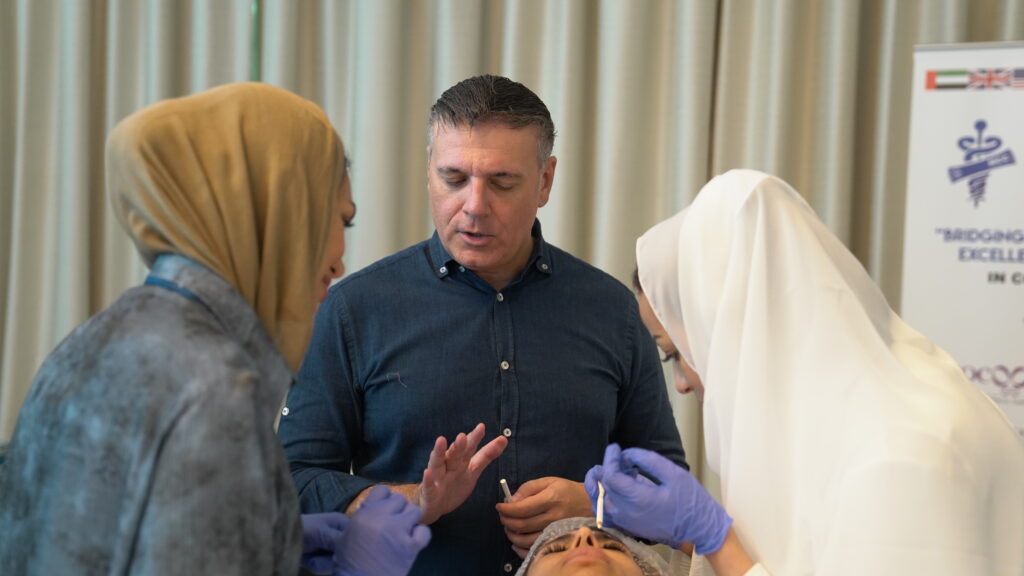
  • Supervised, hands-on clinical training
  • Progressive skill development
  • Formal competency assessment

Our step-based programs are designed to support physicians at different stages of their aesthetic medicine journey—from foundational skills to advanced clinical application—while respecting the scope of practice defined by local regulatory authorities.

International Perspective, Clinical Focus

ABAMCS operates internationally, with a strong focus on the Middle East and other non-U.S. regions. Our faculty includes experienced clinicians and educators with diverse international backgrounds who emphasize safe technique, sound clinical judgment, and ethical practice.

Rather than promoting titles or status, ABAMCS prioritizes clinical competence, patient safety, and reproducible outcomes, the elements that matter most in daily practice.

Professional Certification with Clear Boundaries

ABAMCS awards professional certification to participants who successfully complete all educational requirements, supervised clinical components, procedural documentation, and competency assessments established by the organization.

ABAMCS certification is an educational credential that reflects advanced training and demonstrated competence. It does not constitute medical licensure, governmental recognition, or certification by any national statutory medical board. Medical licensure and scope of practice remain governed by applicable local laws and regulatory authorities.


Message from the Regional Head of Medical Education

At ABAMCS, medical education is guided by one core principle: clinical competence must always come before titles.

Our role as medical leadership is to ensure that all educational programs emphasize safe technique, sound clinical judgment, and ethical patient care. ABAMCS programs are designed to support physicians in developing practical skills through structured training, supervised clinical experience, and competency-based assessment.

We are committed to delivering education that is relevant to real clinical practice and aligned with regional regulatory standards. Our focus is on helping physicians build confidence through knowledge, experience, and responsible practice.


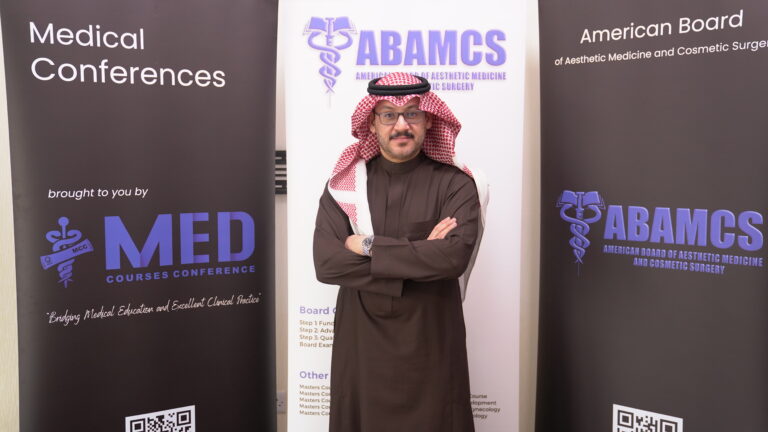
Dr. Mazen Arafeh
Plastic & Reconstructive Surgeon
Regional Head of Medical Education – Middle East
ABAMCS

American Board of Aesthetic Medicine and Cosmetic Surgery

Mission

To deliver rigorous, transparent, and practice-relevant education that empowers licensed physicians and dentists to develop safe, effective, and ethical aesthetic medicine skills within their scope of practice.

Vision

To be a trusted international leader in professional education for aesthetic medicine, recognized for integrity, clinical excellence, and ethical standards

Our Values

Clinical Excellence

We prioritize sound technique, evidence-informed practice, and reproducible clinical outcomes.

Integrity & Transparency

We clearly define what our certification represents—and what it does not—so physicians, patients, and partners can make informed decisions.

Ethical Practice

Patient safety, professional responsibility, and respect for regulatory boundaries guide all our educational activities.

Professional Development

We support lifelong learning and progressive skill development at every stage of a physician’s career.

International ABAMCS Faculty

Faculty Role Disclaimer:

Faculty members and academic leaders featured on this website contribute to ABAMCS programs in an educational and advisory capacity. All faculty maintain independent professional practices and are not employees, partners, or clinical representatives of ABAMCS. Educational roles do not imply clinical supervision, endorsement, or institutional affiliation beyond program-related academic activities.